Quick Summary
- Select PET cup sizes by serving requirements and verified dimensions, not nominal ounces alone.
- Top diameter, bottom diameter, height, rim geometry, and lid series can all affect operational fit.
- Cup and lid compatibility should be confirmed with supplier specifications and physical samples before order approval.
- A rational size range balances beverage applications, branding needs, carton packing, and SKU complexity.
PET cup sizes should not be selected by nominal ounces alone. For importers, distributors, beverage brands, and procurement managers, the correct choice depends on the intended serving volume, usable headspace, cup height, top and bottom diameter, rim system, compatible lid series, presentation requirements, and packing plan. Two cups described with the same nominal capacity can still differ in profile or component fit. The safest buying process is to define the beverage application first, compare verified supplier specifications second, and approve the actual cup-and-lid combination through samples before mass ordering.
How Are PET Cup Sizes Defined?
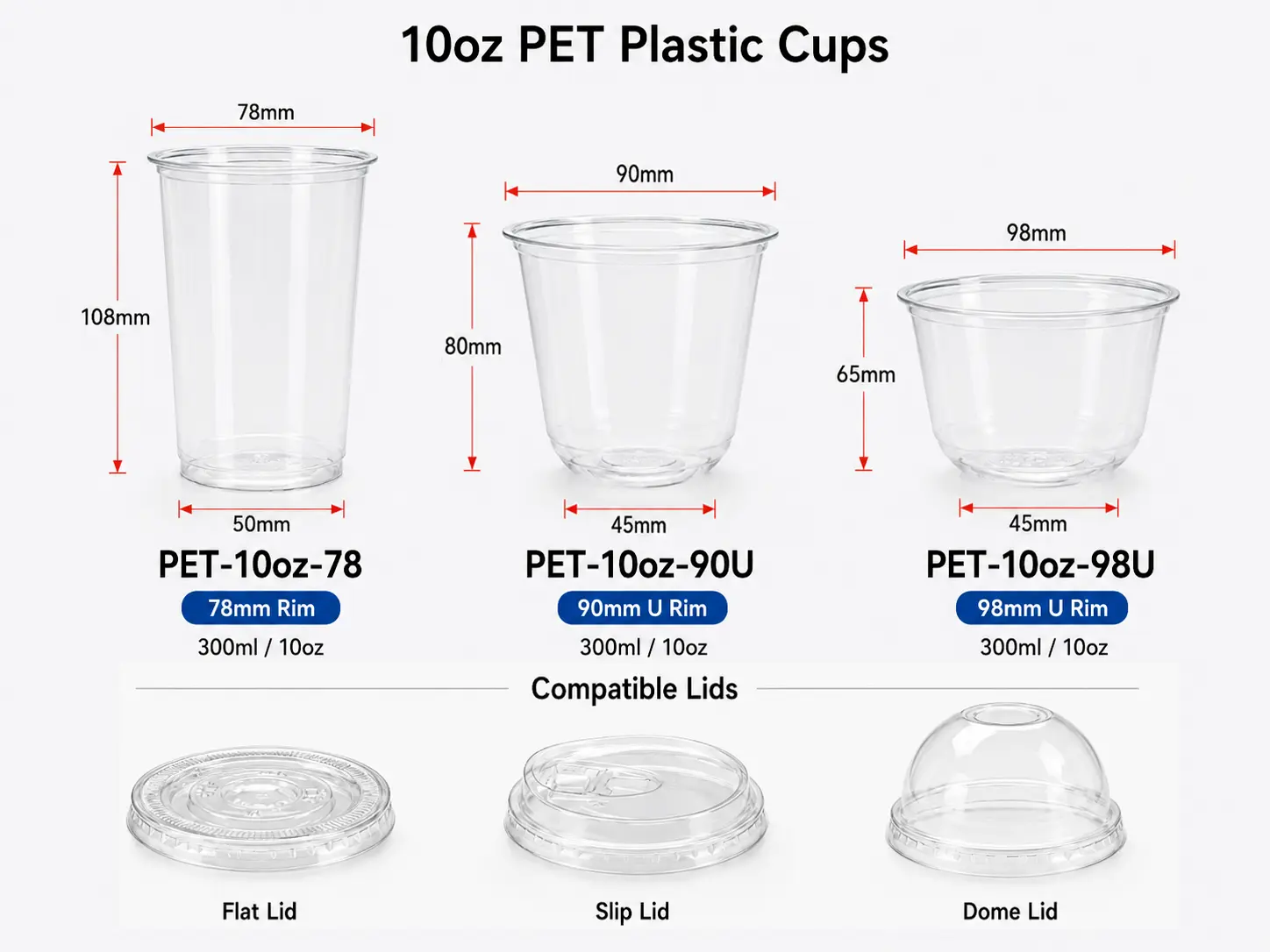
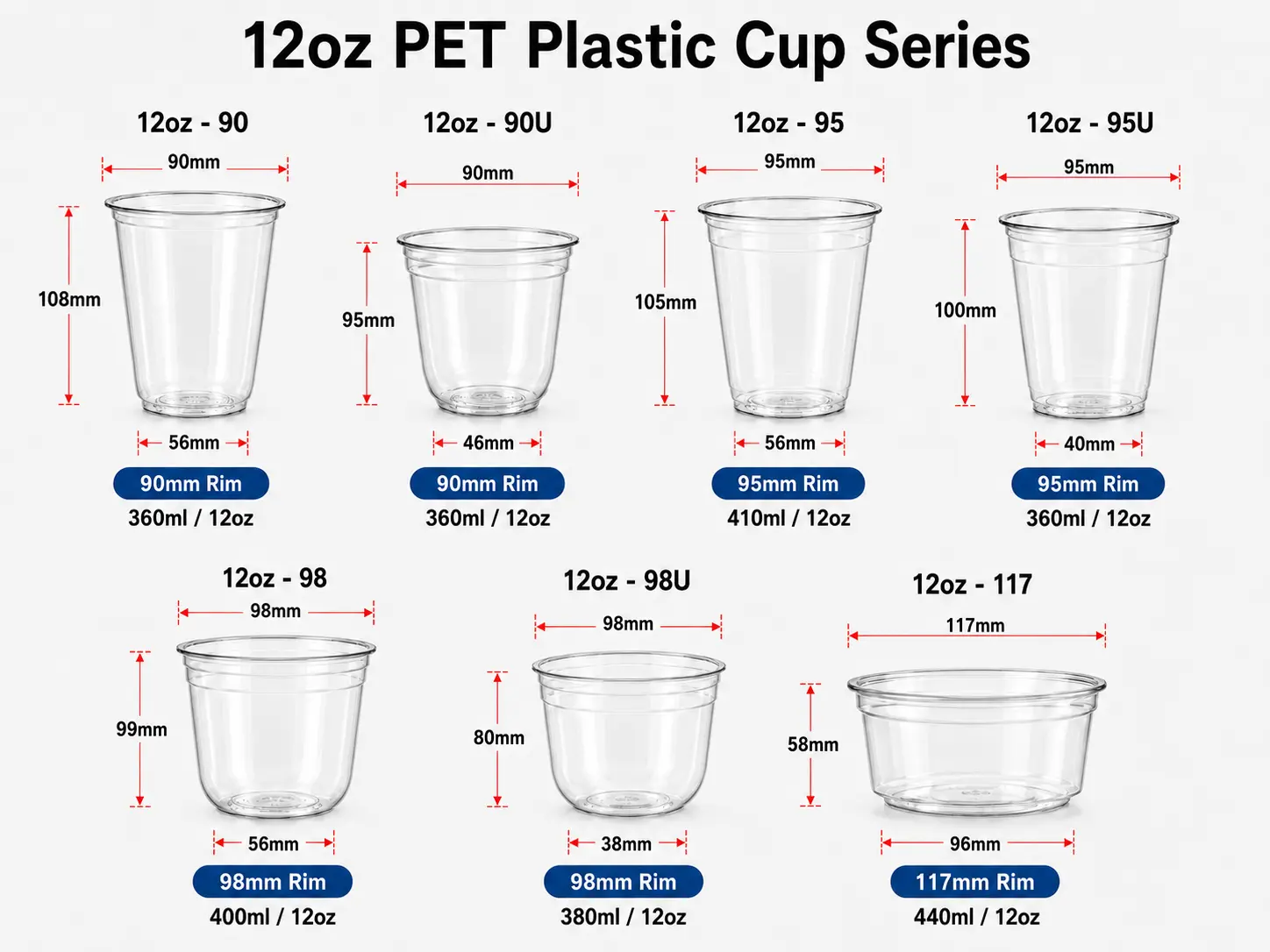
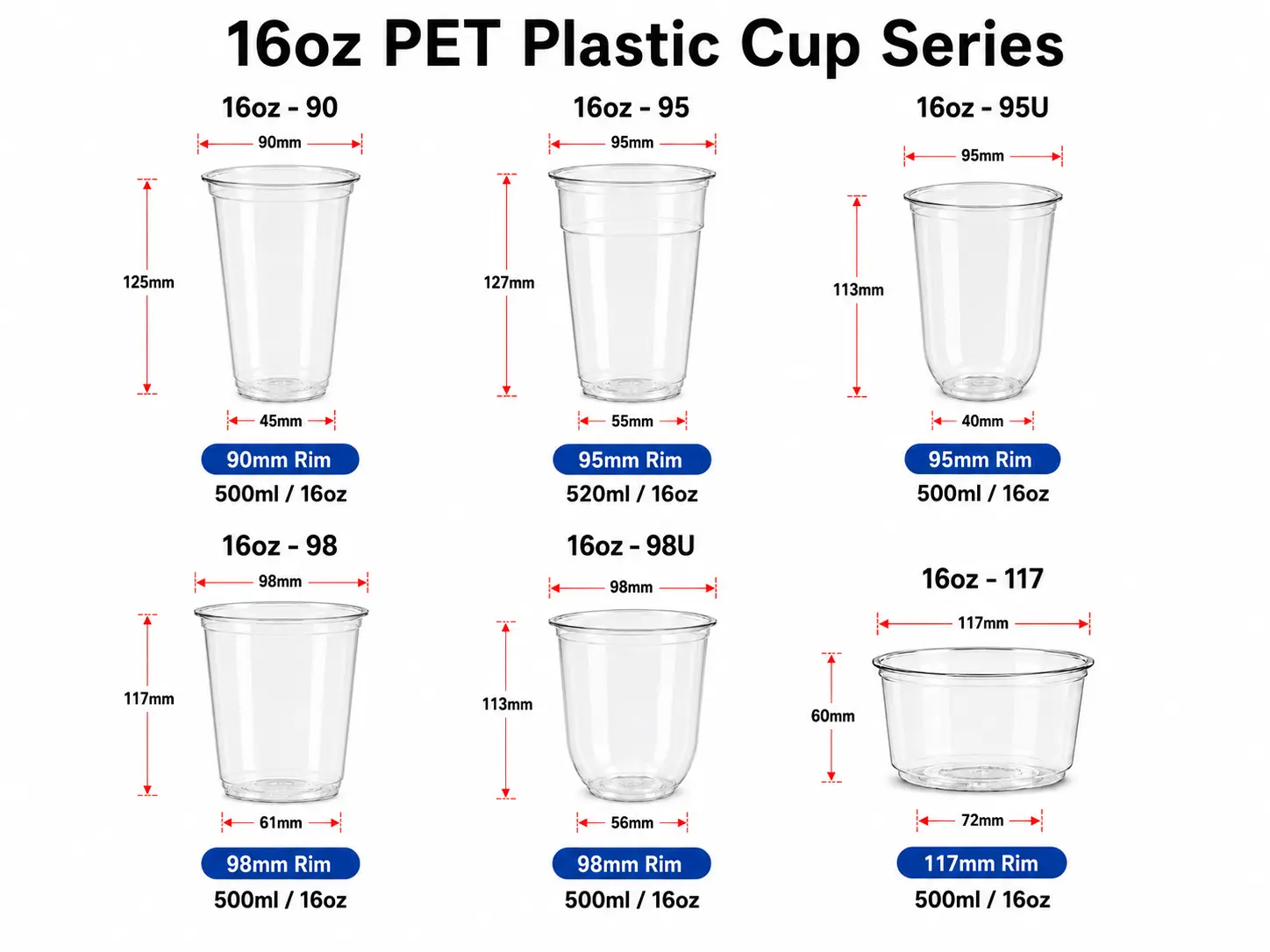
PET cup sizes are usually communicated through nominal capacity in ounces, milliliters, or both. Capacity creates a shortlist, but a commercial specification also needs physical dimensions and the exact rim or lid system because these variables influence presentation, component fit, storage, and equipment compatibility.
Nominal Capacity Versus Usable Serving Volume
Nominal capacity is the supplier's stated volume; usable serving volume reflects real filling conditions. Ice, foam, fruit pieces, toppings, headspace, and the lid profile can reduce the practical liquid volume. Procurement teams should define the recipe and fill method before choosing a size, then verify the finished presentation with a sample.
Why the Same Ounce Size Can Have Different Cup Profiles
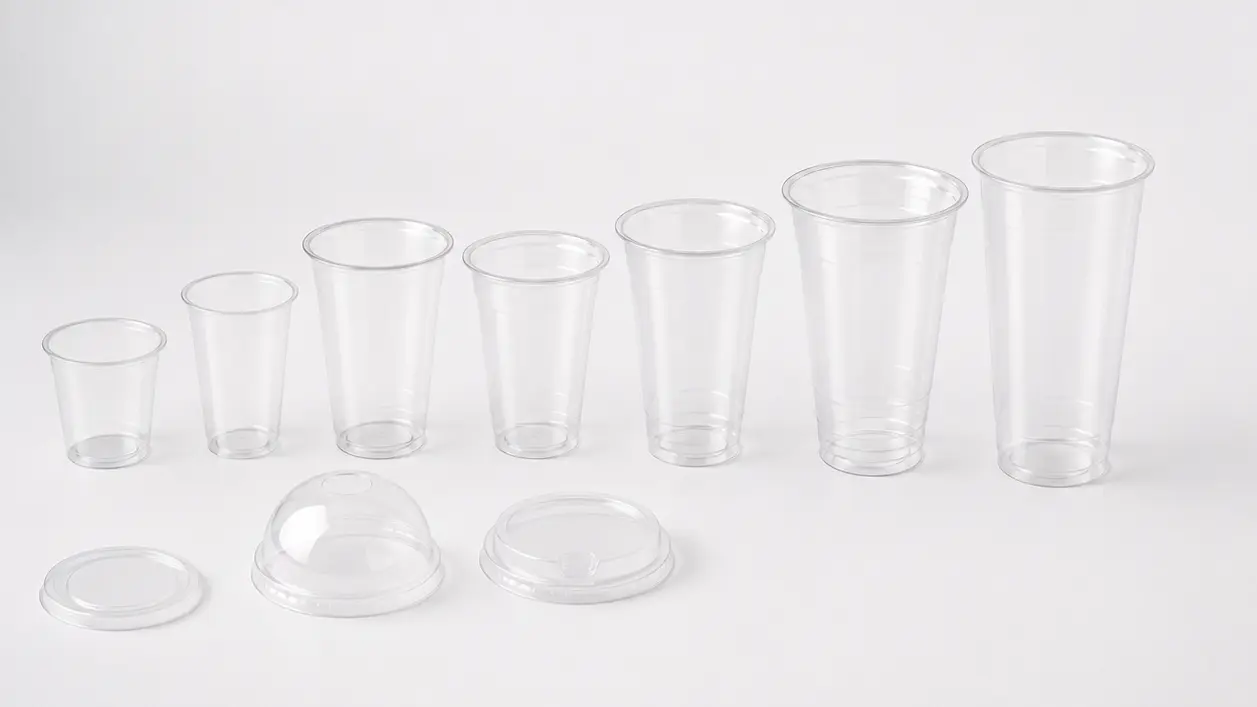
Cups with the same nominal capacity can have different heights, taper angles, base widths, and top diameters. Those differences may affect holders, dispensers, equipment clearance, carton use, presentation, and lid compatibility. The specification should identify the exact product code and drawing rather than relying on capacity alone.
Key PET Cup Size Rule
Use nominal capacity to create the shortlist, but use verified dimensions, rim information, matching lid codes, and physical samples to approve the final product.
Capacity vs. Dimensions: What Buyers Need to Measure
The most useful PET cup specification combines capacity with a small set of critical measurements. Each measurement answers a different procurement question. Recording them consistently makes it easier to compare suppliers, review samples, and prevent an unapproved substitution from being treated as equivalent.
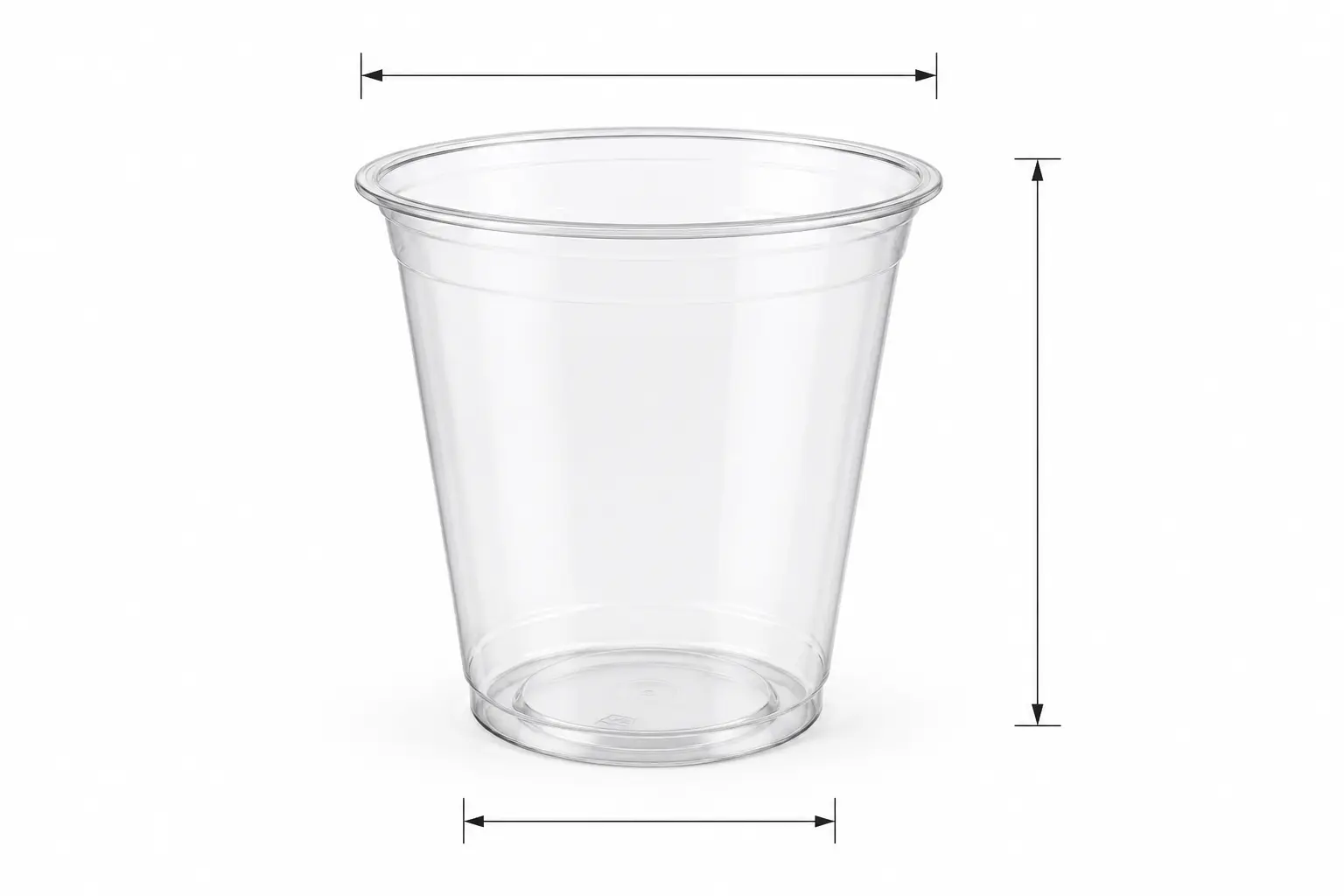
Top Diameter, Bottom Diameter and Cup Height
The top diameter helps identify the rim family and potential lid match. The bottom diameter can influence fit in cup holders, carriers, racks, or dispensing systems. Cup height affects visual presentation, filling equipment clearance, storage configuration, and carton dimensions. None of these values should be inferred from a product photograph or from the capacity name.
Buyers should request the supplier's current specification sheet or drawing and make sure the measurement method is clear. A specification should also be tied to the exact product code so that purchasing, quality control, artwork, and warehouse teams are reviewing the same item.
How Cup Shape Changes Presentation and Operations
A taller or more tapered cup can create a different visual impression from a shorter or wider cup, even when the stated capacity is similar. Shape may also change how cups nest, how stable a filled cup feels, how much printable or visible branding area is available, and how efficiently cartons use space. These are operational and merchandising decisions, not merely aesthetic preferences.
PET Cup Size Chart: What Procurement Teams Should Compare
A useful PET cup size chart should do more than list ounces. It should connect each product candidate to its verified dimensions, compatible components, intended use, and approval evidence. The following framework can be applied to every SKU in a supplier comparison without inserting unverified product numbers.
| Comparison field | What to record | Why it changes the decision | Approval evidence |
|---|---|---|---|
| Nominal capacity | Ounces and milliliters for the exact SKU | Creates the size shortlist and supports portion planning | Current product specification |
| Usable fill requirement | Target beverage volume plus ice, toppings, or headspace | Connects the nominal size to the real recipe | Filled application sample |
| Top diameter and rim system | Verified top measurement, rim profile, and supplier lid family | Determines which lid system requires fit evaluation | Drawing, lid code, and fit sample |
| Bottom diameter | Verified base measurement | Affects holders, carriers, racks, and dispensers | Drawing and equipment check |
| Cup height and profile | Verified height, taper, and overall cup shape | Influences presentation, clearance, nesting, and cartons | Drawing and physical sample |
| Matching lid options | Exact flat, dome, or other lid codes approved for the cup | Controls component count and service format | Supplier compatibility list and assembled samples |
| Packing configuration | Units per sleeve, sleeves per carton, carton dimensions, and labeling details | Affects logistics, storage, and SKU management | Approved packing specification |
How to Read a Supplier's PET Cup Specification
Check that every value belongs to the same product code. Confirm the capacity basis, units, measurement method, exact lid codes, and current packing version. Do not compare nominal capacity with recommended fill volume or mix different diameter conventions. Request clarification before evaluating price or consolidating SKUs.
Rim Diameter and Lid Compatibility
Lid compatibility is a high-risk part of PET cup size selection because capacity does not establish rim geometry. Evaluate each lid against its specified cup series. Similar top diameters do not prove interchangeability when rim shape, tolerance, or component design differs.
Why Cup Volume Does Not Determine Lid Fit
Different capacities may share a lid within a verified product family, while equal capacities may use different lids. Depend on compatibility data for the exact codes, not a broad statement that a lid “fits several sizes.”
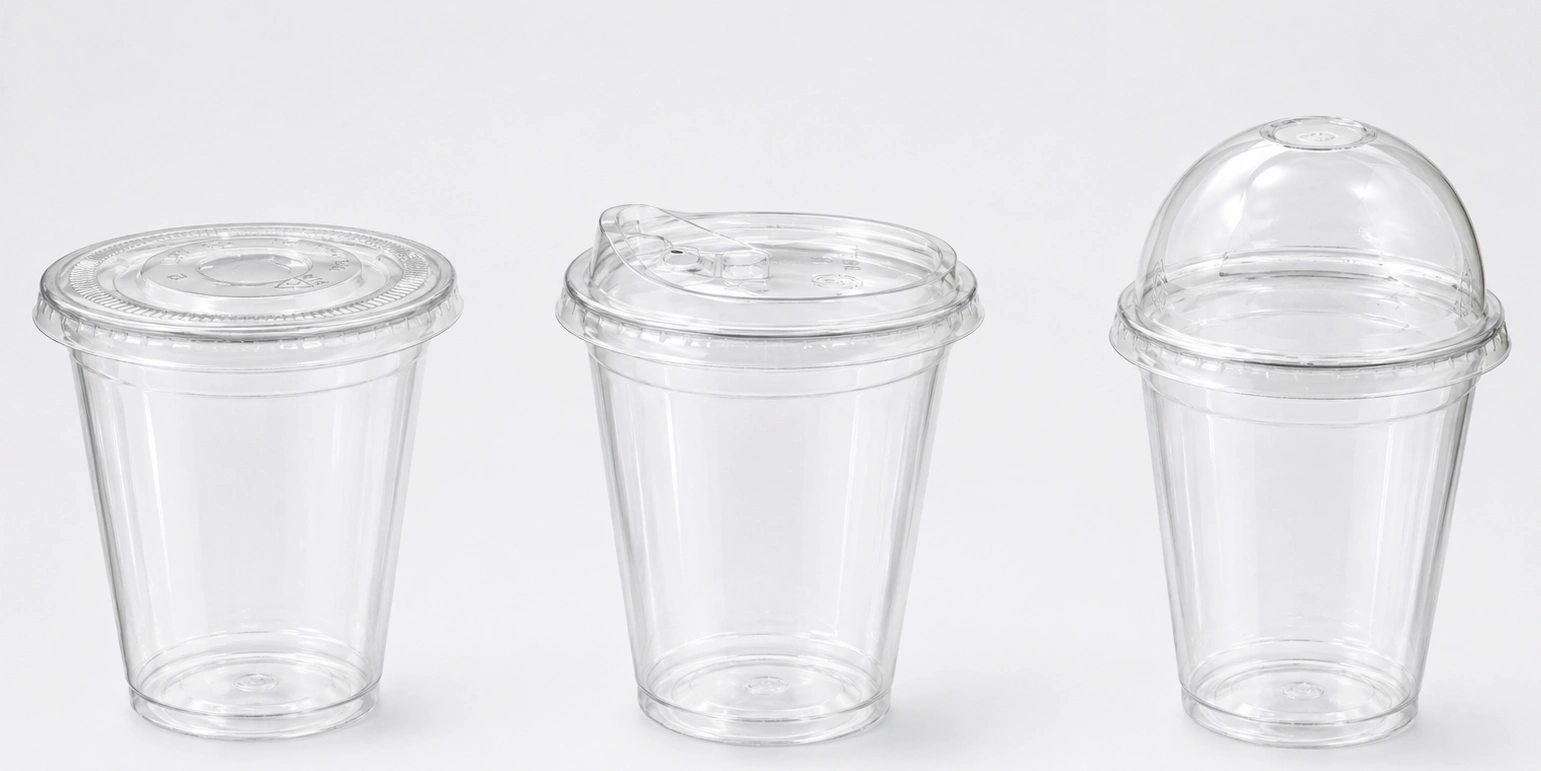
Flat, Dome and Specialty Lid Options
Flat, dome, and other lid profiles support different presentation and service needs. Toppings, foam, straw openings, sipping features, and required vertical space should be matched to the beverage process. Confirm actual lid availability for every cup size from supplier data.
When Physical Fit Testing Is Necessary
Use physical samples to assess assembly, retention, handling, leakage risk, deformation, straw access, and delivery conditions. Test the intended cup, lid, beverage, and handling process; another size or lid family cannot approve the final combination.
Lid Compatibility Ordering Risk
Ordering lids by nominal cup volume can create a fit failure if the rim systems differ. Before mass production, confirm the product drawing, exact cup and lid codes, supplier compatibility statement, and assembled sample. Record the approved combination in the purchasing specification so that a visually similar component is not accepted as an automatic substitute.
Choosing PET Cup Sizes by Beverage Application
The best size range is application dependent. Define the serving policy, beverage composition, ice or topping volume, lid format, branding objective, and channel before selecting SKUs. The following scenarios are decision frameworks, not universal size recommendations.
Water, Juice and Standard Cold Drinks
For straightforward beverages, compare target serving volume with the headspace needed for filling and handling. Check holders, dispensers, and trays. A shared verified rim system may simplify multi-size lid inventory, but compatibility must be confirmed.
Iced Coffee, Smoothies and Blended Drinks
Iced coffee, smoothies, and blended drinks require attention to ice displacement, foam, thickness, straw access, and visual proportion. Taller and wider profiles create different presentations, so test the actual recipe and lid for appearance and handling.
Drinks With Toppings or Extra Headspace
Fruit pieces, toppings, and foam reduce practical liquid volume. Define whether they sit below the rim, extend into a dome lid, or require a particular opening. Approve the capacity as a complete serving system.
Events, Sampling and High-Volume Foodservice
Sampling programs may prioritize portion control and compact storage; high-volume operations may prioritize fast assembly, replenishment, and fewer lid SKUs. A broader range improves choice but increases inventory complexity and mismatch risk.
Common PET Cup Size Ordering Mistakes
Most preventable mistakes occur when one convenient label is used as a substitute for the full specification. Capacity names, product photos, and general lid descriptions can help discovery, but they are not enough for commercial approval.
Buying PET Cups by Ounces Alone
Approving a cup only by ounces can lead to an unexpected height, width, appearance, or usable fill level. The remedy is to combine the capacity requirement with the drawing, intended recipe, and filled sample. This also gives brand and operations teams an opportunity to approve presentation before the order is finalized.
Assuming Lids Are Interchangeable Across Suppliers
A similar capacity or top measurement does not prove that two lid systems are interchangeable. Supplier changes, product substitutions, or mixed sourcing programs should trigger a fresh review of exact component codes and physical fit. Compatibility should be documented for each approved source.
Ignoring Packing and SKU Complexity
A size assortment that works for the menu may still be inefficient for importing, warehousing, and distribution. Buyers should evaluate sleeve counts, carton configuration, cup-to-lid order ratios, labeling, pallet planning, and replenishment patterns. Reducing the number of rim systems may simplify operations, but only when the chosen products and lids are genuinely compatible and suitable for the applications.
PET Cup Size Buyer Checklist
Use the following checks to convert a general size request into an approvable purchasing specification.
- Define the intended beverage, channel, serving method, and target filled volume.
- Account for ice, foam, toppings, fruit pieces, and required headspace.
- Confirm nominal capacity in both ounces and milliliters for the exact SKU.
- Confirm top diameter, bottom diameter, height, profile, and measurement basis.
- Match the cup rim system to exact flat, dome, or other lid codes.
- Review branding area, artwork placement, and visual presentation on a real sample.
- Confirm sleeve count, carton configuration, labeling, and export packing details.
- Approve assembled cup-and-lid samples under the intended use and handling conditions.
A Practical Size Approval Process
- Create an application brief covering beverage volume, additions, lid format, equipment, branding, and distribution channel.
- Compare only supplier SKUs with complete capacity, dimension, rim, lid, and packing information.
- Request representative cup-and-lid samples and evaluate the intended recipe, presentation, assembly, and handling process.
- Record the approved product codes, specifications, artwork, packing data, and sample reference before quotation or order approval.
Final Recommendation
Build the PET cup size range from the application outward. First define the target serving volume and any space required for ice, foam, or toppings. Next compare the exact physical dimensions and cup profiles that can support the required presentation and operational fit. Then narrow the range by verified rim and lid compatibility, branding needs, packing configuration, and SKU complexity.
Do not approve a universal “best” PET cup size or assume that equal ounces mean equal dimensions or lid fit. Before quotation, sampling, or order approval, confirm the exact cup code, nominal capacity, top and bottom diameter, height, rim system, matching lid codes, intended application, artwork requirements, carton data, and assembled physical samples. A conditional, documented selection process is more reliable than choosing from a capacity list alone.
Frequently Asked Questions
What PET Cup Size Should a Buyer Choose?
Define the beverage, filled volume, ice or toppings, headspace, lid, equipment, and presentation. Use capacity for the shortlist, then approve exact dimensions, rim system, product code, packing data, and a filled cup-and-lid sample.
Do PET Cups With the Same Ounce Capacity Use the Same Lid?
Not necessarily. Equal capacity does not prove the same top diameter, rim geometry, or lid family. Confirm exact cup and lid codes with current compatibility data and assembled samples. Never assume cross-supplier or cross-series interchangeability from ounces alone.
Which Dimensions Matter Besides Cup Capacity?
Top diameter, bottom diameter, and cup height are the core dimensions to request. Buyers may also need the cup profile, taper, rim system, and any equipment-specific clearance information. These factors can affect lid fit, holders, dispensers, filling operations, nesting, presentation, and carton planning.
Should PET Cup Sizes Be Listed in Ounces or Milliliters?
For international B2B purchasing, recording both units can reduce communication errors between markets and teams. The capacity value should still be tied to the exact product code and measurement basis. Unit labels do not replace the need to confirm physical dimensions, usable serving requirements, rim compatibility, and samples.
Which Cup and Lid Sizes Should Be Sampled Before Ordering?
Sample every intended cup-and-lid combination, especially across capacities, rim systems, lid profiles, suppliers, or beverage conditions. Test the recipe, filling, assembly, handling, delivery, branding, and equipment. One SKU cannot approve another combination.